Free discovery call with our principal designer.
✕
Free discovery call with our principal designer.
✕

Builder-Grade vs Custom Finishes: Where an Upgrade Is Worth It
Which finishes to upgrade first, from hardware and flooring to millwork and lighting, where builder grade is fine, and how to compare finish quotes fairly.
Which finishes to upgrade first, from hardware and flooring to millwork and lighting, where builder grade is fine, and how to compare finish quotes fairly.
Which finishes to upgrade first, from hardware and flooring to millwork and lighting, where builder grade is fine, and how to compare finish quotes fairly.
M.V
Marian Vist · Principal designer
·
·
5 min read
Take this into your home
Bring this article into your first conversation.
Share the passage and explain how it relates to the home you are planning.
01
01
Where an upgrade pays off, in short
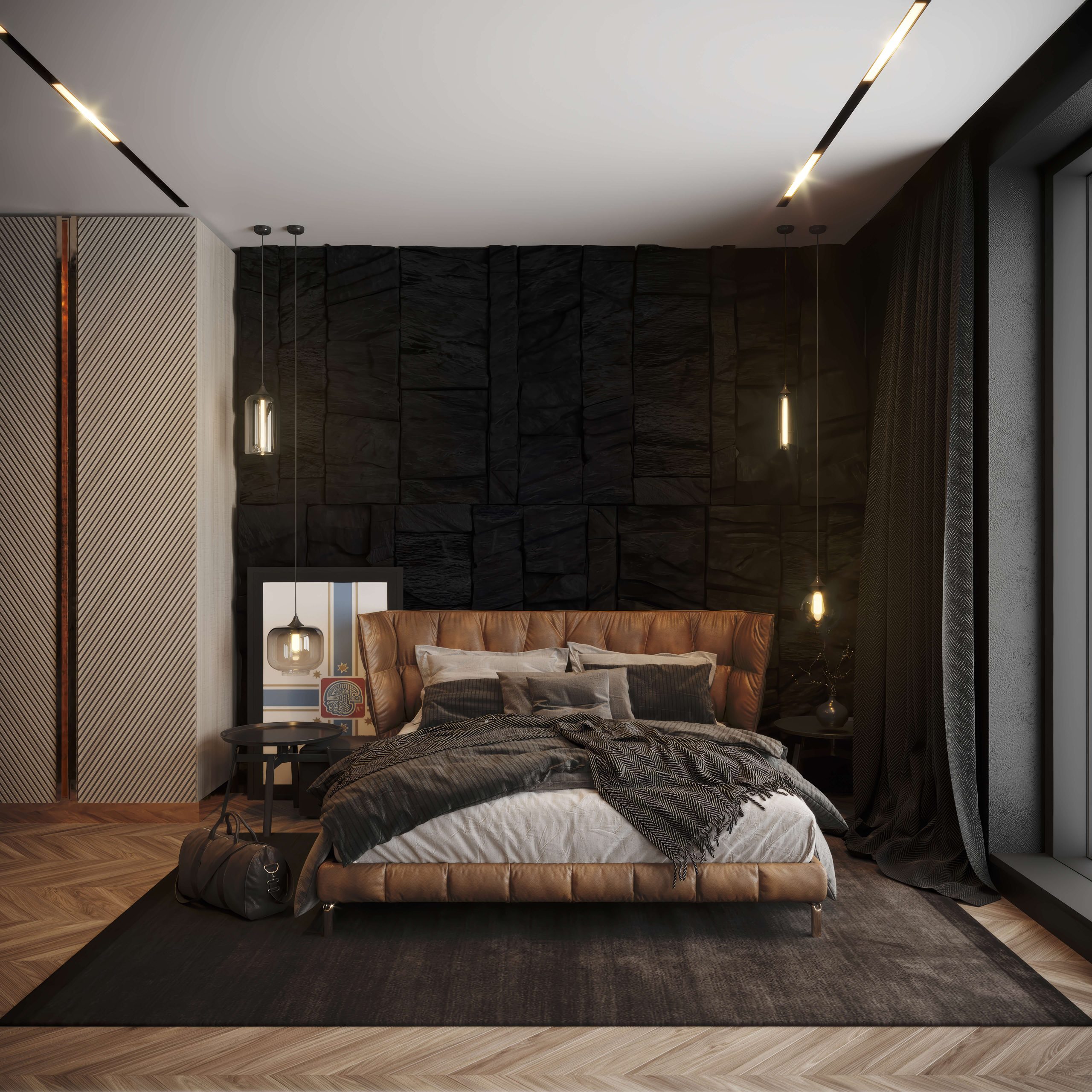
Upgrade the things you touch and the surfaces you see most: door hardware, faucets, flooring, built-in millwork and lighting. Keep builder-grade finishes where performance is equal and visibility is low, such as secondary bathroom tile, closet interiors and utility rooms. That split usually delivers the feel of a custom home without paying custom prices everywhere. Builder grade is not a defect. It describes products chosen for price, availability and quick installation across many homes: hollow-core doors, lightweight lever sets, entry-level engineered flooring, stock cabinetry with thin finishes, and a standard grid of recessed lights. Most of it works. The problem is that it rarely ages well where hands and eyes return every day. A custom finish is specified for a particular house: solid materials, heavier gauges, finishes that patina rather than peel, and details drawn for the room instead of picked from a catalog. It costs more, and in many places that extra cost is invisible. So the useful question is not which finish is better, but where the difference will be felt. The sections that follow rank the upgrades by how often they are noticed and how hard they are to change later.
Upgrade the things you touch and the surfaces you see most: door hardware, faucets, flooring, built-in millwork and lighting. Keep builder-grade finishes where performance is equal and visibility is low, such as secondary bathroom tile, closet interiors and utility rooms. That split usually delivers the feel of a custom home without paying custom prices everywhere. Builder grade is not a defect. It describes products chosen for price, availability and quick installation across many homes: hollow-core doors, lightweight lever sets, entry-level engineered flooring, stock cabinetry with thin finishes, and a standard grid of recessed lights. Most of it works. The problem is that it rarely ages well where hands and eyes return every day. A custom finish is specified for a particular house: solid materials, heavier gauges, finishes that patina rather than peel, and details drawn for the room instead of picked from a catalog. It costs more, and in many places that extra cost is invisible. So the useful question is not which finish is better, but where the difference will be felt. The sections that follow rank the upgrades by how often they are noticed and how hard they are to change later.
02
02
Touch points: hardware, faucets and switches
Touch points are the most efficient upgrade in any home because they are handled many times a day. A solid brass lever with a proper rose and a firm spring feels substantial in a way a lightweight zinc lever never will, and the difference registers every time a door opens. The same logic applies to cabinet pulls, appliance handles, window hardware and shower controls. Faucets deserve attention for function as well as feel. Solid brass bodies, well-made ceramic cartridges and durable PVD or living finishes tend to outlast entry-level fixtures, which often rely on plated plastic parts and cartridges that are harder to source later. A thermostatic shower valve keeps temperature stable when a tap opens elsewhere in the house, a small luxury that changes the daily shower. Switches and outlets are an overlooked touch point. Screwless plates, metal toggles or well-made rockers, and keypads that recall lighting scenes make a house feel considered. Setting them at a consistent height and distance from door casings costs nothing beyond planning. One caution: too many metals across these items reads as accidental. Choosing one or two finishes for the house, from a small number of makers, matters more than the price of any single piece.
Touch points are the most efficient upgrade in any home because they are handled many times a day. A solid brass lever with a proper rose and a firm spring feels substantial in a way a lightweight zinc lever never will, and the difference registers every time a door opens. The same logic applies to cabinet pulls, appliance handles, window hardware and shower controls. Faucets deserve attention for function as well as feel. Solid brass bodies, well-made ceramic cartridges and durable PVD or living finishes tend to outlast entry-level fixtures, which often rely on plated plastic parts and cartridges that are harder to source later. A thermostatic shower valve keeps temperature stable when a tap opens elsewhere in the house, a small luxury that changes the daily shower. Switches and outlets are an overlooked touch point. Screwless plates, metal toggles or well-made rockers, and keypads that recall lighting scenes make a house feel considered. Setting them at a consistent height and distance from door casings costs nothing beyond planning. One caution: too many metals across these items reads as accidental. Choosing one or two finishes for the house, from a small number of makers, matters more than the price of any single piece.
03
03
Flooring and millwork set the tone
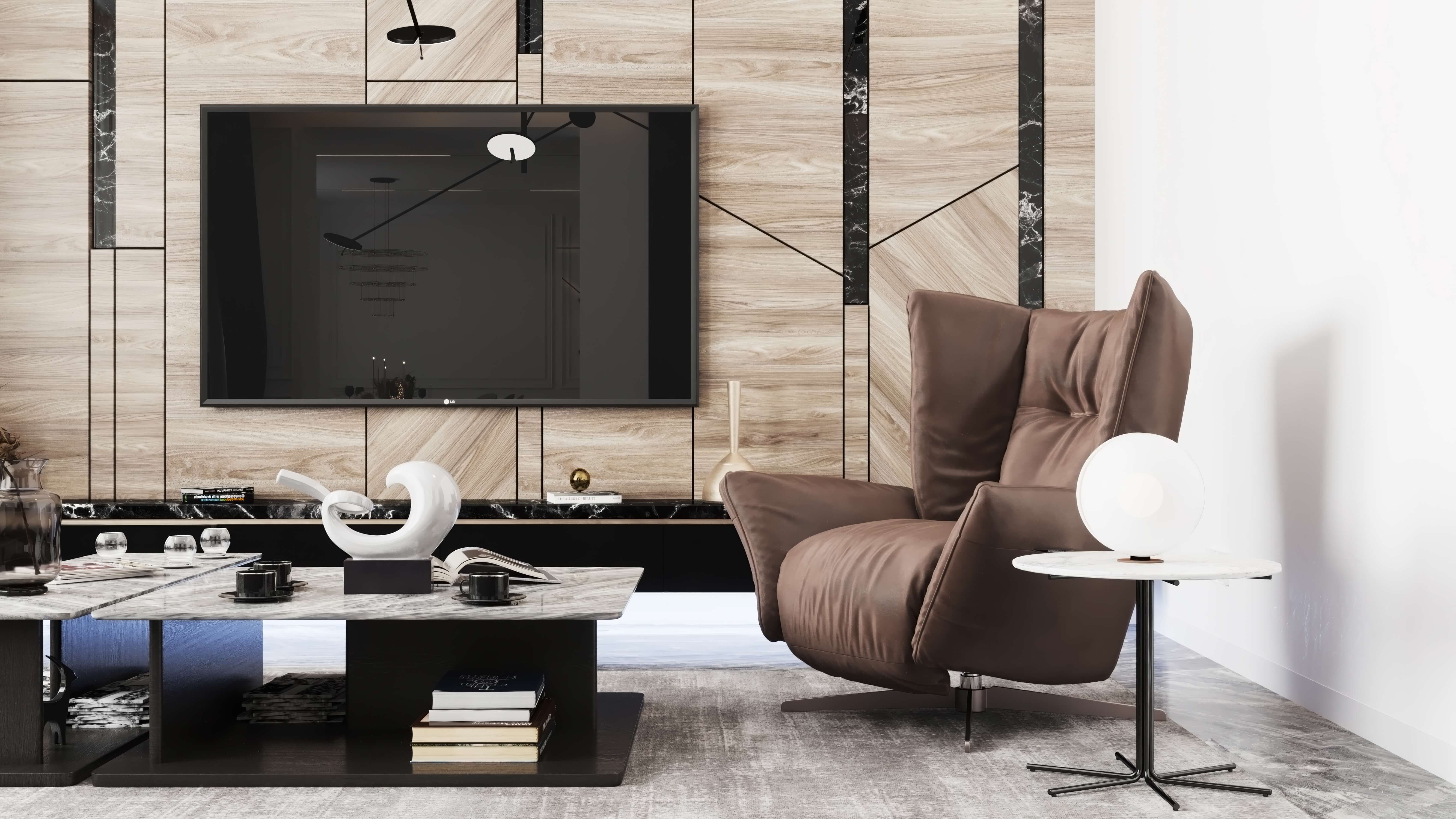
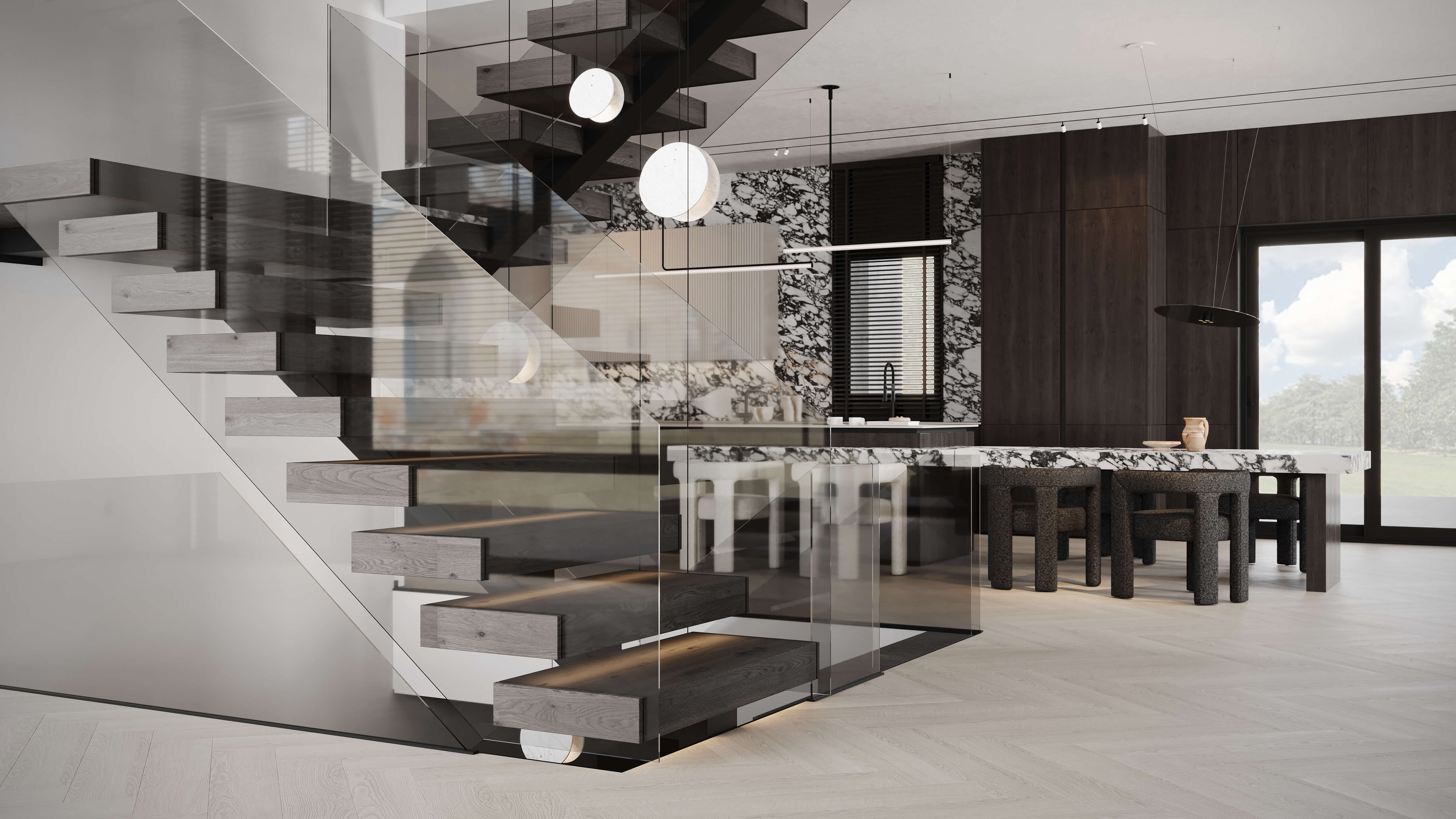
Floors cover more visible area than any other finish, so their quality sets the baseline for everything placed on them. Builder-grade options are often engineered planks with a thin wear layer, narrow widths and heavily filled or printed surfaces. Solid wood, or engineered wood with a thicker wear layer, in wider boards and an oil or matte finish changes how a room reads in daylight, and either can be sanded and refinished later. Stone and tile follow the same logic. Natural stone in a primary bath or entry rewards careful slab selection and layout, while porcelain is often the smarter choice for secondary baths, mudrooms and humid Florida homes, where it resists moisture and needs little care. Millwork is where custom work earns its cost most clearly. Stock cabinetry comes in fixed widths finished with filler strips, which shows in kitchens and closets. Cabinetry built to the actual wall can run to the ceiling, conceal appliances and integrate lighting. Paneling, deeper casings, built-in bookcases and window seats add architecture that furniture cannot. If the budget forces a choice, put millwork into rooms used daily, such as the kitchen and family room, before formal rooms seen only occasionally.
Floors cover more visible area than any other finish, so their quality sets the baseline for everything placed on them. Builder-grade options are often engineered planks with a thin wear layer, narrow widths and heavily filled or printed surfaces. Solid wood, or engineered wood with a thicker wear layer, in wider boards and an oil or matte finish changes how a room reads in daylight, and either can be sanded and refinished later. Stone and tile follow the same logic. Natural stone in a primary bath or entry rewards careful slab selection and layout, while porcelain is often the smarter choice for secondary baths, mudrooms and humid Florida homes, where it resists moisture and needs little care. Millwork is where custom work earns its cost most clearly. Stock cabinetry comes in fixed widths finished with filler strips, which shows in kitchens and closets. Cabinetry built to the actual wall can run to the ceiling, conceal appliances and integrate lighting. Paneling, deeper casings, built-in bookcases and window seats add architecture that furniture cannot. If the budget forces a choice, put millwork into rooms used daily, such as the kitchen and family room, before formal rooms seen only occasionally.
04
04
Lighting: the upgrade with the largest effect
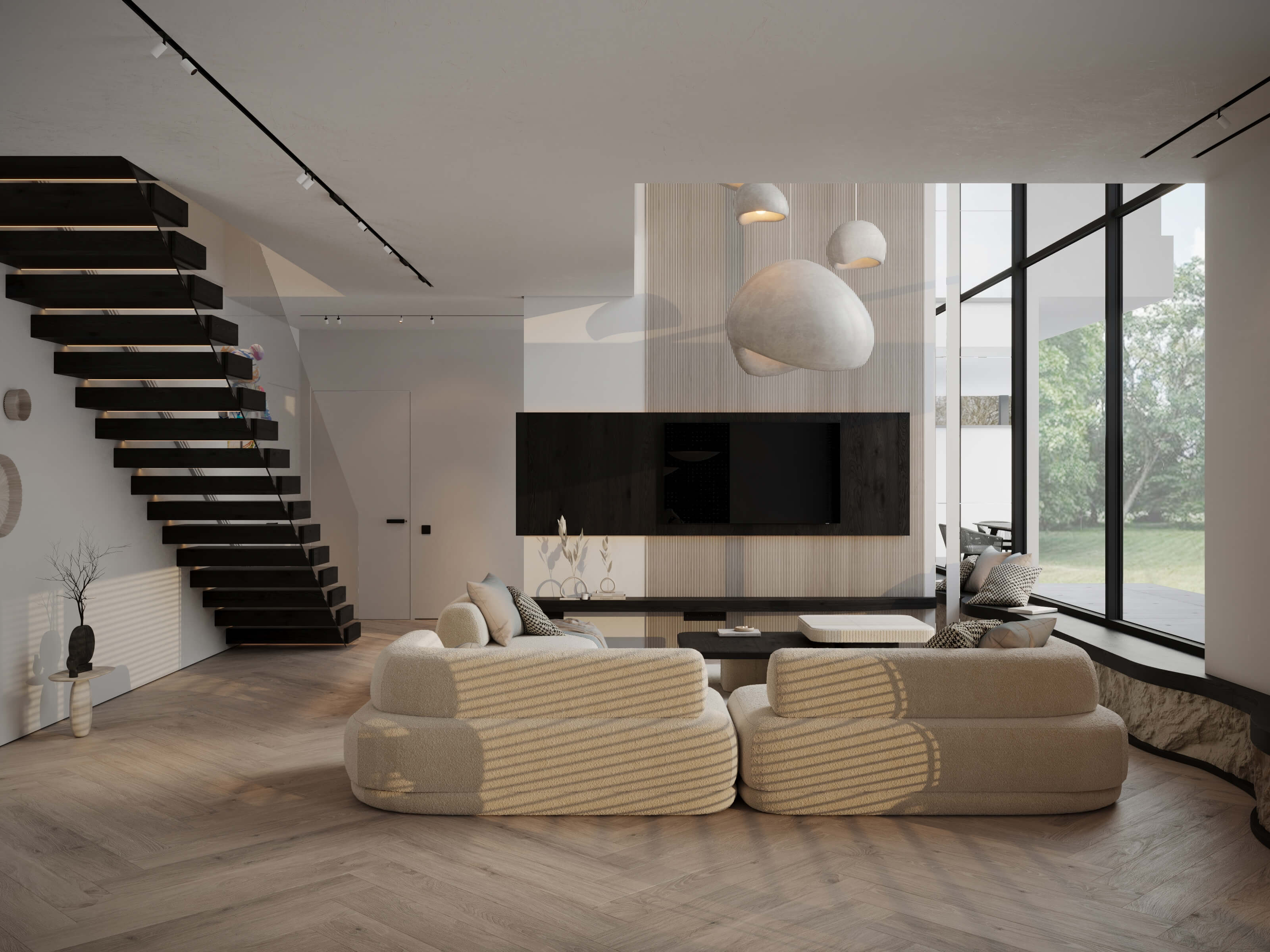
Builder-grade lighting is usually a grid of recessed cans at a single color temperature, plus a ceiling fixture in each bedroom. It illuminates but does not compose. Replacing it with a layered plan often changes a room more than any finish upgrade, and the hardware itself does not need to be expensive. Layering means combining ambient light, task light at counters and desks, accent light on art and architecture, and decorative fixtures that give each room a focal point. The practical details matter. Recessed fixtures with deeper baffles reduce glare. A high color rendering index, often 90 or above, keeps wood, stone and skin tones natural. Consistent color temperature, typically 2700K to 3000K in living spaces, prevents the patchwork look of mixed lamps. Controls are part of the upgrade. Dimming on every circuit, scenes for evening and entertaining, and switches placed where people enter a room make a house feel finished. Under-cabinet lighting, coves and lit shelving are inexpensive when planned before drywall and costly afterward. Decorative fixtures (chandeliers, pendants and sconces) are where designer pieces earn their place. Spending there, while keeping recessed lighting quiet and well placed, is a balance that works at almost any budget.
Builder-grade lighting is usually a grid of recessed cans at a single color temperature, plus a ceiling fixture in each bedroom. It illuminates but does not compose. Replacing it with a layered plan often changes a room more than any finish upgrade, and the hardware itself does not need to be expensive. Layering means combining ambient light, task light at counters and desks, accent light on art and architecture, and decorative fixtures that give each room a focal point. The practical details matter. Recessed fixtures with deeper baffles reduce glare. A high color rendering index, often 90 or above, keeps wood, stone and skin tones natural. Consistent color temperature, typically 2700K to 3000K in living spaces, prevents the patchwork look of mixed lamps. Controls are part of the upgrade. Dimming on every circuit, scenes for evening and entertaining, and switches placed where people enter a room make a house feel finished. Under-cabinet lighting, coves and lit shelving are inexpensive when planned before drywall and costly afterward. Decorative fixtures (chandeliers, pendants and sconces) are where designer pieces earn their place. Spending there, while keeping recessed lighting quiet and well placed, is a balance that works at almost any budget.
05
05
Where builder grade is perfectly fine
Not every surface needs to be special, and spending evenly across a house usually means underspending where it counts. Several categories are good candidates for standard, well-installed products. Secondary bathroom field tile is one. A clean porcelain in a simple format, laid with tight joints and a well-chosen grout color, looks considered. The money goes to the vanity, faucet and lighting, which carry the room. Closet, pantry and laundry interiors are another. Melamine boxes with good hardware perform well, and what people notice is the organization and the lighting, not the carcass material. Mechanical systems should never be cut, but they need not be premium for its own sake. Reliable, serviceable equipment from established manufacturers is often wiser than high-end systems few local technicians support. Doors are the exception that proves the rule. Standard slab designs are fine in secondary rooms, but they should be solid-core. Hollow-core doors are one of the few builder items worth replacing everywhere, because their sound and feel undermine everything around them. The test is simple. If a finish is touched daily, seen from the main living areas, or hard to replace without demolition, consider upgrading it. If it is none of these, standard is usually fine.
Not every surface needs to be special, and spending evenly across a house usually means underspending where it counts. Several categories are good candidates for standard, well-installed products. Secondary bathroom field tile is one. A clean porcelain in a simple format, laid with tight joints and a well-chosen grout color, looks considered. The money goes to the vanity, faucet and lighting, which carry the room. Closet, pantry and laundry interiors are another. Melamine boxes with good hardware perform well, and what people notice is the organization and the lighting, not the carcass material. Mechanical systems should never be cut, but they need not be premium for its own sake. Reliable, serviceable equipment from established manufacturers is often wiser than high-end systems few local technicians support. Doors are the exception that proves the rule. Standard slab designs are fine in secondary rooms, but they should be solid-core. Hollow-core doors are one of the few builder items worth replacing everywhere, because their sound and feel undermine everything around them. The test is simple. If a finish is touched daily, seen from the main living areas, or hard to replace without demolition, consider upgrading it. If it is none of these, standard is usually fine.
06
06
Comparing quotes, and how we specify finishes
Quotes for finishes are only comparable when they describe the same thing. Two flooring bids can differ in species, grade, board width, wear layer, finish and installation method and still both say oak floor. Ask every supplier and contractor to list maker, model, finish, dimensions, quantity and lead time, and check whether waste, delivery, preparation and sealing are included. Watch allowances in particular. A low allowance for tile, hardware or lighting makes a bid look attractive and moves the cost to later, when the real selection is made under time pressure. At ImPERFECTION DESIGN we treat finishes as part of a single design rather than a menu of upgrades. Every room is developed in photorealistic 3D before ordering, so clients can see where a custom detail makes a difference and where a standard product reads just as well. The itemized furniture list is priced at cost, and all products and construction are purchased with 0% markup, with every supplier invoice visible to the client. That transparency makes the trade-offs plain. When the true cost of each upgrade is visible, deciding where to spend becomes a design conversation rather than a guess.
Quotes for finishes are only comparable when they describe the same thing. Two flooring bids can differ in species, grade, board width, wear layer, finish and installation method and still both say oak floor. Ask every supplier and contractor to list maker, model, finish, dimensions, quantity and lead time, and check whether waste, delivery, preparation and sealing are included. Watch allowances in particular. A low allowance for tile, hardware or lighting makes a bid look attractive and moves the cost to later, when the real selection is made under time pressure. At ImPERFECTION DESIGN we treat finishes as part of a single design rather than a menu of upgrades. Every room is developed in photorealistic 3D before ordering, so clients can see where a custom detail makes a difference and where a standard product reads just as well. The itemized furniture list is priced at cost, and all products and construction are purchased with 0% markup, with every supplier invoice visible to the client. That transparency makes the trade-offs plain. When the true cost of each upgrade is visible, deciding where to spend becomes a design conversation rather than a guess.
Questions
What does builder grade mean in a home?
–
Builder grade describes products chosen for low cost, availability and quick installation across many homes: hollow-core doors, lightweight hardware, entry-level flooring, stock cabinetry and basic lighting. These finishes usually work, but they tend to wear faster and feel less substantial where people touch and look every day, which is why selective upgrades often make a noticeable difference.
Which finish upgrades make the biggest difference?
+
Door and cabinet hardware, faucets and shower valves, flooring, built-in millwork and lighting usually make the largest difference, because they are handled daily or cover the most visible area. A layered lighting plan with dimming often changes a room more than any single material. Secondary tile, closet interiors and laundry spaces can typically stay standard.
Are hollow-core doors worth replacing?
+
In most homes, yes. Hollow-core doors transmit sound, feel light when closed and dent easily, which undermines better finishes nearby. Solid-core doors cost more but improve acoustic privacy and the sense of quality throughout the house. They are one of the few builder-grade items worth replacing everywhere rather than selectively, even in secondary rooms.
How do I compare finish quotes from different contractors?
+
Make sure every quote lists the same products by maker, model, finish, size and quantity, along with lead times and what installation includes. Check for allowances, since a low tile or lighting allowance can make a bid look cheaper until actual selections are priced. A designer's finish schedule gives every bidder an identical scope to price.
M.V
Marian Vist
Principal designer, ImPERFECTION DESIGN. Creates the design concept and leads the decisions that shape each home. New York · New Jersey · Florida · International.
Meet Marian
Continue reading
All articles
Take the idea into your own home.
Tell us which subject connects with your plans and the decision you would like to explore.
Tell us which subject connects with your plans and the decision you would like to explore.