Free discovery call with our principal designer.
✕
Free discovery call with our principal designer.
✕

Eclectic Luxury Interior Design: Mixing Without Clutter
Eclectic luxury interior design that stays composed: rules for mixing periods and colors, choosing anchors, and building a collection over time.
Eclectic luxury interior design that stays composed: rules for mixing periods and colors, choosing anchors, and building a collection over time.
Eclectic luxury interior design that stays composed: rules for mixing periods and colors, choosing anchors, and building a collection over time.
M.V
Marian Vist · Principal designer
·
·
5 min read
Take this into your home
Bring this article into your first conversation.
Share the passage and explain how it relates to the home you are planning.
01
01
What eclectic luxury interior design is (and is not)
Eclectic luxury interior design is the deliberate mixing of periods, cultures, colors and materials within one disciplined framework. It is not an absence of rules. The rooms that work have a clear thread, usually a palette, a material or a recurring line, and a few strong anchors that hold the variety together. The difference between eclectic and cluttered is editing. A cluttered room accumulates; an eclectic room composes. Each piece has been chosen for how it relates to its neighbors in color, scale or shape, even when its origin is entirely different. Eclecticism has a long pedigree. Collectors' houses of the eighteenth and nineteenth centuries mixed classical antiquities, Asian porcelain and contemporary portraits. Many of the most memorable twentieth-century interiors combined modern furniture with antiques and African and Oceanic art. What these spaces share is a strong point of view. For a contemporary home, that point of view usually comes from the owners: their travels, inherited furniture, art collection or simply a love of color. The designer's role is to give that personal material a structure, so the home feels like an expression of character rather than a storage solution for possessions.
Eclectic luxury interior design is the deliberate mixing of periods, cultures, colors and materials within one disciplined framework. It is not an absence of rules. The rooms that work have a clear thread, usually a palette, a material or a recurring line, and a few strong anchors that hold the variety together. The difference between eclectic and cluttered is editing. A cluttered room accumulates; an eclectic room composes. Each piece has been chosen for how it relates to its neighbors in color, scale or shape, even when its origin is entirely different. Eclecticism has a long pedigree. Collectors' houses of the eighteenth and nineteenth centuries mixed classical antiquities, Asian porcelain and contemporary portraits. Many of the most memorable twentieth-century interiors combined modern furniture with antiques and African and Oceanic art. What these spaces share is a strong point of view. For a contemporary home, that point of view usually comes from the owners: their travels, inherited furniture, art collection or simply a love of color. The designer's role is to give that personal material a structure, so the home feels like an expression of character rather than a storage solution for possessions.
02
02
Rules for mixing periods
Mixing eras is easier with a few working rules. Limit the cast. Two or three dominant periods per room, for example eighteenth-century French, mid-century Italian and contemporary, are usually enough. More than that and the room starts to read as a showroom of samples. Find a shared quality. A Louis XVI chair and a contemporary sculptural chair can sit together if they share a curve, a tone of wood or an upholstery color. A Georgian table and a steel lamp can share a slender profile. The eye needs a reason to accept the pairing. Vary scale on purpose. A large contemporary sofa next to a small antique side table, or a monumental painting above a delicate console, creates tension that feels intentional. Pieces of similar size from different periods tend to compete. Respect architecture. In a paneled classical room, contemporary furniture provides contrast. In a minimal white box, antiques bring texture and age. Either way, the architecture is one of the voices in the mix. Give every room one undisputed star. A significant antique, an important painting or a dramatic light fitting lets supporting pieces be quieter.
Mixing eras is easier with a few working rules. Limit the cast. Two or three dominant periods per room, for example eighteenth-century French, mid-century Italian and contemporary, are usually enough. More than that and the room starts to read as a showroom of samples. Find a shared quality. A Louis XVI chair and a contemporary sculptural chair can sit together if they share a curve, a tone of wood or an upholstery color. A Georgian table and a steel lamp can share a slender profile. The eye needs a reason to accept the pairing. Vary scale on purpose. A large contemporary sofa next to a small antique side table, or a monumental painting above a delicate console, creates tension that feels intentional. Pieces of similar size from different periods tend to compete. Respect architecture. In a paneled classical room, contemporary furniture provides contrast. In a minimal white box, antiques bring texture and age. Either way, the architecture is one of the voices in the mix. Give every room one undisputed star. A significant antique, an important painting or a dramatic light fitting lets supporting pieces be quieter.
03
03
Color and pattern without chaos
Color is where eclectic rooms either sing or fall apart. A practical structure is a dominant tone on walls and large surfaces, a secondary tone in upholstery and rugs, and an accent that appears in small doses. Ratios close to 60, 30 and 10 percent are a useful starting point, not a rule. Repetition makes bold choices look deliberate. When an accent color appears three times in a room, for example in a cushion, a vase and a detail in a painting, it reads as a decision. When it appears once, it often looks accidental. Dark envelopes help. Deep walls in ink blue, forest green, aubergine or charcoal make varied furniture and art glow, because the background recedes. Light walls work too, but they expose every inconsistency. Pattern needs the same discipline. Combine patterns at different scales: one large, such as a bold rug or wallpaper; one medium, such as a stripe or ikat on upholstery; and one small, such as a geometric on cushions. Keep them within related color families. Finally, give the eye places to rest. A plain wall, a solid rug border or a calm upholstered piece between patterns allows a richly layered room to stay comfortable to live in.
Color is where eclectic rooms either sing or fall apart. A practical structure is a dominant tone on walls and large surfaces, a secondary tone in upholstery and rugs, and an accent that appears in small doses. Ratios close to 60, 30 and 10 percent are a useful starting point, not a rule. Repetition makes bold choices look deliberate. When an accent color appears three times in a room, for example in a cushion, a vase and a detail in a painting, it reads as a decision. When it appears once, it often looks accidental. Dark envelopes help. Deep walls in ink blue, forest green, aubergine or charcoal make varied furniture and art glow, because the background recedes. Light walls work too, but they expose every inconsistency. Pattern needs the same discipline. Combine patterns at different scales: one large, such as a bold rug or wallpaper; one medium, such as a stripe or ikat on upholstery; and one small, such as a geometric on cushions. Keep them within related color families. Finally, give the eye places to rest. A plain wall, a solid rug border or a calm upholstered piece between patterns allows a richly layered room to stay comfortable to live in.
04
04
Anchors that hold a varied room together
Anchors are the large, stable elements that bring order. Without them, an eclectic room drifts. The rug is the most important. A large rug, typically leaving 8 to 18 inches of floor around the edges, defines the seating area and sets the color base for everything on it. Antique Persian, Tibetan or contemporary hand-knotted rugs can all work, but the rug should be chosen before most fabrics. Architecture is the second anchor. Paneling, a strong fireplace, built-in bookcases or a dramatic ceiling provide structure that furniture can play against. Large-scale art is the third. A single significant painting or tapestry gives the room a focal point and often provides the palette from which other choices are drawn. A consistent metal finish and a consistent wood tone are quieter anchors. If brass appears in lamps, hardware and picture lights, the different periods of furniture beneath them feel connected. Lighting completes the framework. Layered light, with ceiling fixtures, wall lights, table lamps and picture lights at warm color temperatures around 2700K, lets each element read clearly without harsh shadows. Dark, richly furnished rooms need more light sources than pale, minimal ones.
Anchors are the large, stable elements that bring order. Without them, an eclectic room drifts. The rug is the most important. A large rug, typically leaving 8 to 18 inches of floor around the edges, defines the seating area and sets the color base for everything on it. Antique Persian, Tibetan or contemporary hand-knotted rugs can all work, but the rug should be chosen before most fabrics. Architecture is the second anchor. Paneling, a strong fireplace, built-in bookcases or a dramatic ceiling provide structure that furniture can play against. Large-scale art is the third. A single significant painting or tapestry gives the room a focal point and often provides the palette from which other choices are drawn. A consistent metal finish and a consistent wood tone are quieter anchors. If brass appears in lamps, hardware and picture lights, the different periods of furniture beneath them feel connected. Lighting completes the framework. Layered light, with ceiling fixtures, wall lights, table lamps and picture lights at warm color temperatures around 2700K, lets each element read clearly without harsh shadows. Dark, richly furnished rooms need more light sources than pale, minimal ones.
05
05
Collecting over time, and a mountain penthouse example
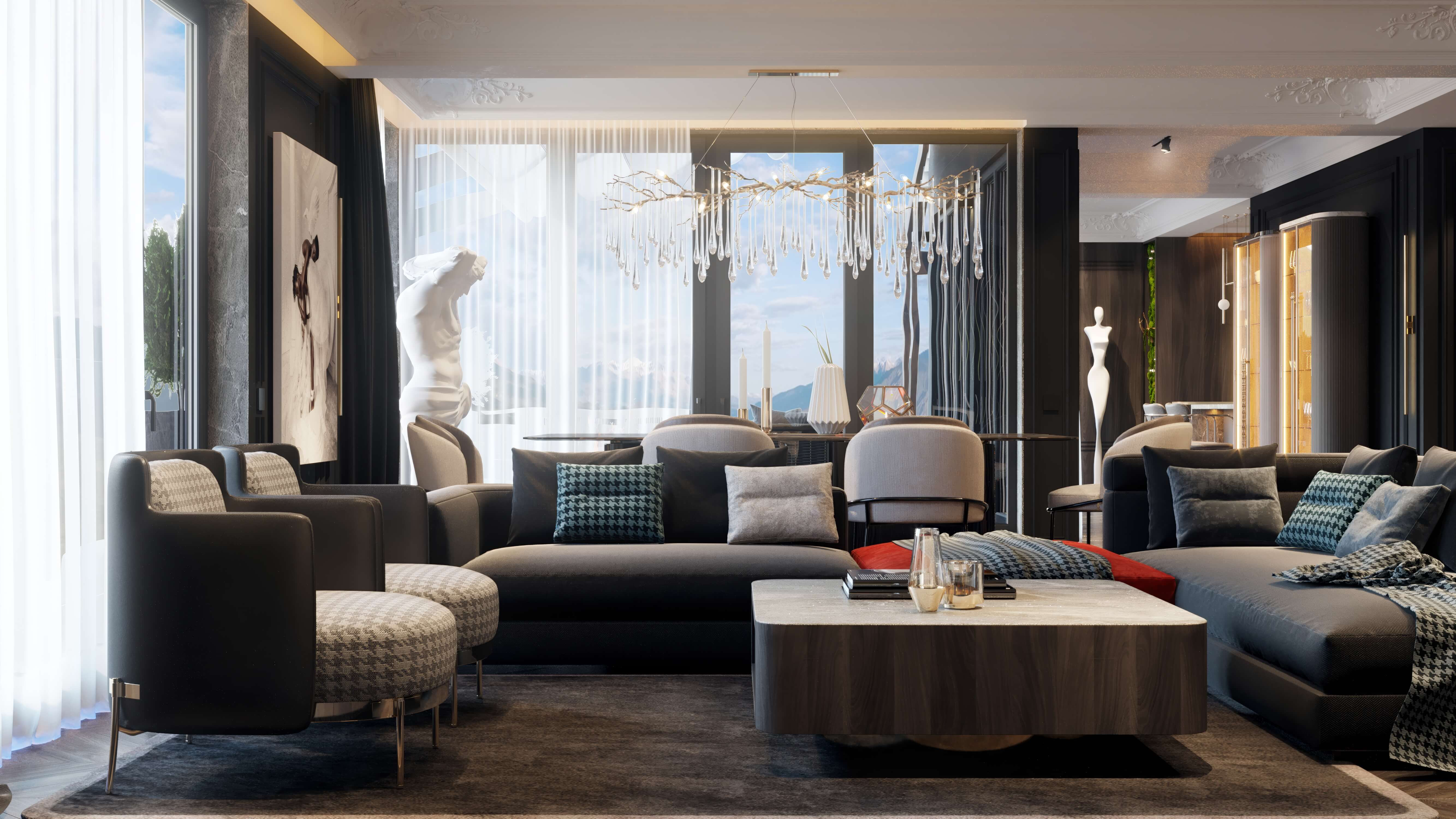
The most convincing eclectic interiors are rarely bought in a single season. They grow. A practical approach is to complete the architecture, the anchors and the essential furniture in the main project, then leave deliberate gaps on walls, shelves and consoles for pieces found later. Grouping collections gives them force. Ten ceramic pieces together on a shelf or a wall of framed drawings carry more presence than the same objects scattered through a house. Keep grouped items within a shared color range or material to avoid visual noise. Our Eclectic Mountain Penthouse in Brasov, Romania, illustrates the approach. Dark classical interiors meet contemporary furniture, and a generous terrace with a pool and spa opens toward the Carpathian landscape. The dark classical envelope acts as the anchor, allowing contemporary pieces to read as deliberate contrast rather than as interruptions, while the landscape beyond the terrace provides a calm counterpoint to the richness inside. The same principles transfer to a Manhattan apartment or a Florida residence. The materials change and the climate shapes some choices, but the logic of a strong envelope, a limited cast of periods and room for collecting remains the same.
The most convincing eclectic interiors are rarely bought in a single season. They grow. A practical approach is to complete the architecture, the anchors and the essential furniture in the main project, then leave deliberate gaps on walls, shelves and consoles for pieces found later. Grouping collections gives them force. Ten ceramic pieces together on a shelf or a wall of framed drawings carry more presence than the same objects scattered through a house. Keep grouped items within a shared color range or material to avoid visual noise. Our Eclectic Mountain Penthouse in Brasov, Romania, illustrates the approach. Dark classical interiors meet contemporary furniture, and a generous terrace with a pool and spa opens toward the Carpathian landscape. The dark classical envelope acts as the anchor, allowing contemporary pieces to read as deliberate contrast rather than as interruptions, while the landscape beyond the terrace provides a calm counterpoint to the richness inside. The same principles transfer to a Manhattan apartment or a Florida residence. The materials change and the climate shapes some choices, but the logic of a strong envelope, a limited cast of periods and room for collecting remains the same.
06
06
How ImPERFECTION DESIGN approaches eclectic interiors
We have no single house style, which makes eclectic projects a natural fit. We start by cataloging what a client already owns and loves, from inherited furniture and art to travel finds, and decide what stays, what is restored and what new pieces are needed to complete the composition. Our Neo-Deco and Modern Heritage directions often inform the structure. Eclectic rooms are particularly hard to judge from swatches, so every room is modeled in photorealistic 3D, often with a 360° tour. Clients see how an antique cabinet sits against a dark wall or how three patterns read together before anything is ordered, and comment in as many rounds as they need within each design stage. Sourcing for these projects is broad: antiques, contemporary makers, custom upholstery and workrooms. We buy through a network of 150+ suppliers at cost with 0% markup, and clients see every invoice, which makes it easy to understand where each investment goes. The design fee is fixed before design work begins, and one leader, Marian Vist, remains responsible throughout. After installation, twelve months of adjustments leave room for the collection to keep evolving.
We have no single house style, which makes eclectic projects a natural fit. We start by cataloging what a client already owns and loves, from inherited furniture and art to travel finds, and decide what stays, what is restored and what new pieces are needed to complete the composition. Our Neo-Deco and Modern Heritage directions often inform the structure. Eclectic rooms are particularly hard to judge from swatches, so every room is modeled in photorealistic 3D, often with a 360° tour. Clients see how an antique cabinet sits against a dark wall or how three patterns read together before anything is ordered, and comment in as many rounds as they need within each design stage. Sourcing for these projects is broad: antiques, contemporary makers, custom upholstery and workrooms. We buy through a network of 150+ suppliers at cost with 0% markup, and clients see every invoice, which makes it easy to understand where each investment goes. The design fee is fixed before design work begins, and one leader, Marian Vist, remains responsible throughout. After installation, twelve months of adjustments leave room for the collection to keep evolving.
Questions
How do you keep an eclectic interior from looking cluttered?
–
Choose a clear thread such as a palette, material or recurring shape, limit each room to two or three dominant periods, and establish strong anchors: a large rug, significant art and consistent metal and wood tones. Group collections rather than scattering them, and leave plain surfaces and walls so the eye has places to rest.
How many styles can be mixed in one room?
+
Two or three dominant periods or styles per room is a reliable limit. Each additional influence should share something with the others, such as a color, wood tone or silhouette. Beyond that, smaller objects from other periods can add interest, but the main furniture should come from a focused cast so the room reads as composed.
What wall color works for an eclectic room?
+
Deep colors such as ink blue, forest green, aubergine or charcoal make varied furniture and art stand out because the background recedes. Warm whites and soft neutrals also work but require tighter editing, since a pale background exposes every inconsistency. Either way, the wall color should be repeated elsewhere in textiles or art.
Can an eclectic design include contemporary and antique furniture together?
+
Yes, and the contrast is often the point. Pair pieces that share a quality, such as a curve, a wood tone or an upholstery color, and vary their scale so they do not compete. Classical architecture often benefits from contemporary furniture, while minimal architecture often benefits from antiques with patina.
M.V
Marian Vist
Principal designer, ImPERFECTION DESIGN. Creates the design concept and leads the decisions that shape each home. New York · New Jersey · Florida · International.
Meet Marian
Continue reading
All articles


Take the idea into your own home.
Tell us which subject connects with your plans and the decision you would like to explore.
Tell us which subject connects with your plans and the decision you would like to explore.